


Via San Gregorio Armeno: the nativity street of Naples and its secrets, all year round
In Naples there is a street where Christmas never ends. It is Via San Gregorio Armeno, one of the most picturesque streets in the city, known worldwide for its artisan workshops, where terracotta shepherds, miniature sets and characters of every kind take shape in the skilled hands of the master nativity makers. It is a place where tradition is constantly renewed, among age-old crafts, curiosities and a touch of typically Neapolitan irony.
Walking along Via San Gregorio Armeno means connecting with one of the most distinctive expressions of Neapolitan culture. This guide explains why the nativity street of Naples is much more than a Christmas postcard, what secrets its workshops hold and how to truly experience it.
Where Via San Gregorio Armeno is and how to get there
Via San Gregorio Armeno lies in the heart of the historic center of Naples, a UNESCO World Heritage Site since 1995. It links the decumano maggiore and the decumano inferiore — two of the main east-west streets of the ancient city — and is one of the original cardini, the north-south streets of the Greco-Roman grid. Its position, between Via dei Tribunali and Via San Biagio dei Librai, makes it easy to include in a walk exploring Spaccanapoli and the lanes of the historic center and the surrounding neighborhoods.
The easiest way to get there by metro is to get off at Duomo station (Line 1) and continue on foot along Via Duomo and Via San Biagio dei Librai. Alternatively, on Line 2 you can get off at Cavour and walk there via Via Duomo and Via dei Tribunali.
The area is pedestrianized, making it perfect for exploring slowly, keeping your eyes peeled so as not to miss a single detail of the historic buildings and shop windows lining the street.
A little history: from its origins to the present day
To understand the deeper soul of Via San Gregorio Armeno, you need to travel back in time more than two thousand years. According to tradition, a temple dedicated to Ceres, the Roman goddess of the earth and fertility, once stood in this part of the city. Worshippers offered her small terracotta votive statuettes, probably made in nearby workshops. Although there is no definitive archaeological proof, the story helps explain the bond that still links the street to the making of figurines.
In the 8th century, a group of Basilian nuns fleeing the iconoclast persecutions of the Byzantine Empire reached Naples, bringing with them the relics of Saint Gregory the Illuminator (San Gregorio Armeno), who brought Christianity to Armenia. A first monastic community grew up around the relics and developed over the following centuries in the area where the ancient temple of Ceres was believed to stand. The street took its present name from this religious complex.
Although the art of the nativity scene was already well established in Neapolitan churches, it was in the 18th century that the street became the beating heart of this tradition. Scenes grew richer, with elaborate sets and characters inspired by everyday life alongside the sacred figures. The presepe (nativity scene) thus also became a mirror of the society of the time, combining religious devotion, artistic taste and observation of real life. Specialized workshops and commissions from noble families helped this art flourish, and it has been handed down to the present day.
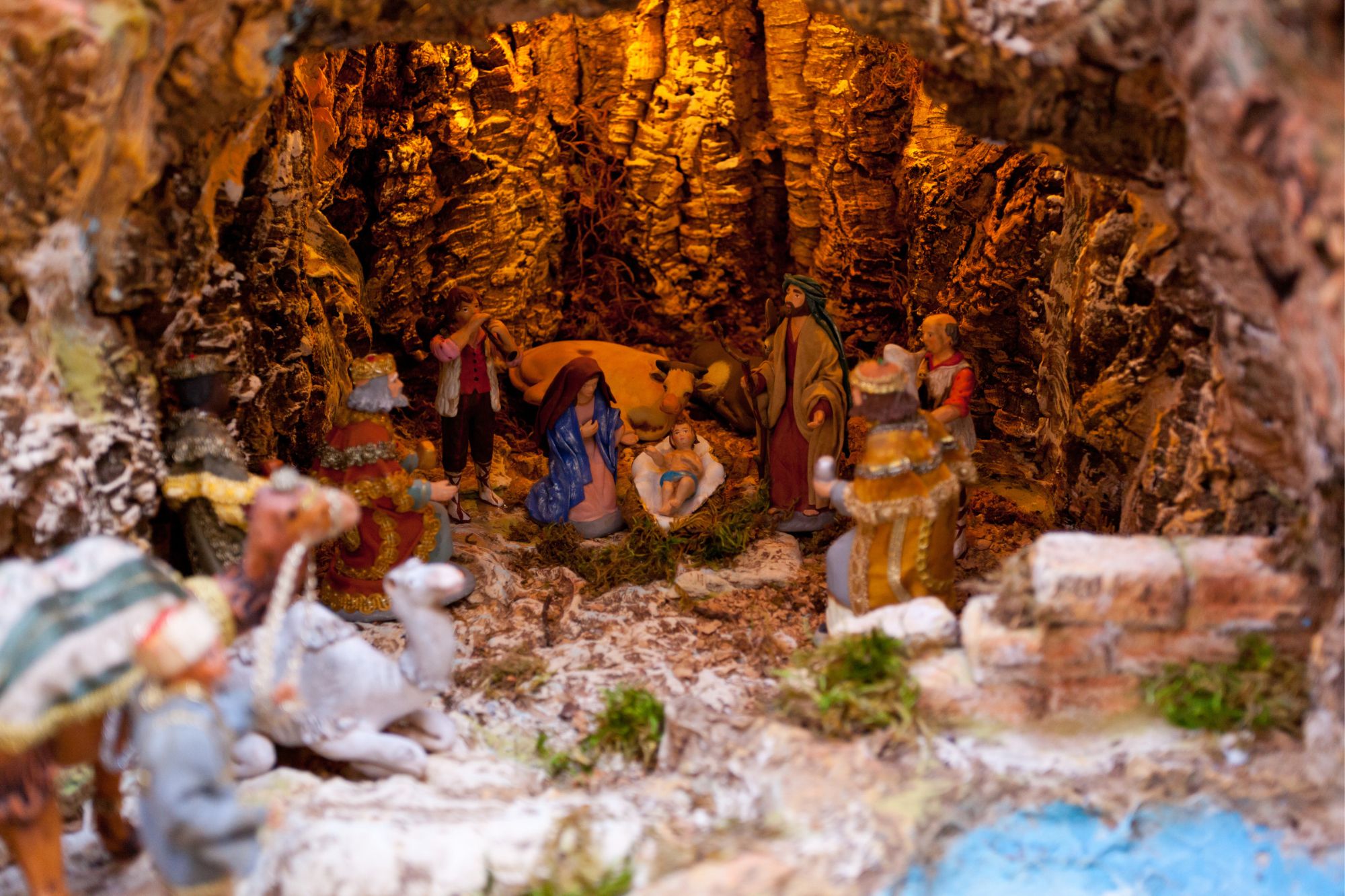
Neapolitan nativity art: how a figurine is made, its secrets and its characters
Neapolitan nativity art has reached a unique level of refinement, blending craftsmanship, scenic imagination and deep symbolism. The figurines made in the workshops of Via San Gregorio Armeno are far more than decorative objects: they require skill, patience and meticulous work. The heads are modeled in terracotta, the bodies built from wire and tow, and the clothes sewn by hand. The result is highly expressive figures that convey emotion and tell a story through a glance or the naturalness of a gesture.
The Neapolitan presepe is not limited to depicting the Nativity. One of its most distinctive traits is its ability to combine the sacred and the profane. Alongside the Holy Family, the shepherds and the angels, there is room for figures from everyday life: the fishmonger, the baker, the woman hanging out the laundry, the greengrocer. The sets are enriched with tiny objects, tools and miniature food, making the composition especially lively. The nativity scene thus becomes a portrait of society, a mirror of Neapolitan life with its customs, trades and traditions.
Some of the traditional characters are rich in symbolic meaning: Benino, the sleeping shepherd who, according to tradition, dreams the entire nativity scene — woe betide anyone who wakes him, because the spell of the scene would vanish the moment he opens his eyes; and Ciccibacco, the cheerful personification of abundance and wine. Over the years, contemporary characters inspired by famous faces from entertainment, sports, politics and the news have joined them. This ability to keep up with the times is one of the reasons Neapolitan nativity art remains alive and loved.
Why it’s Christmas here all year round
What makes Via San Gregorio Armeno special is that you don’t have to wait until December to find nativity scenes and figurines. The workshops are open year-round. Naturally, the atmosphere changes with the calendar.
Between November and December, the street becomes one of the most visited places in Naples. Shop windows fill with Christmas creations and the number of visitors rises sharply. It is undeniably a magical experience, but the crowds can make it hard to linger in front of the workshops and truly take in the atmosphere.
At other times of year, by contrast, a stroll offers more chances to watch the master artisans at work and browse their different creations. The street keeps its character out of season too, revealing a world that doesn’t end with the holidays. Visiting San Gregorio Armeno in spring, summer or autumn is a way to discover another side of Neapolitan culture — and on rainy days, it pairs perfectly with what Naples has to offer indoors, as described in the guide to things to do in Naples when it rains.
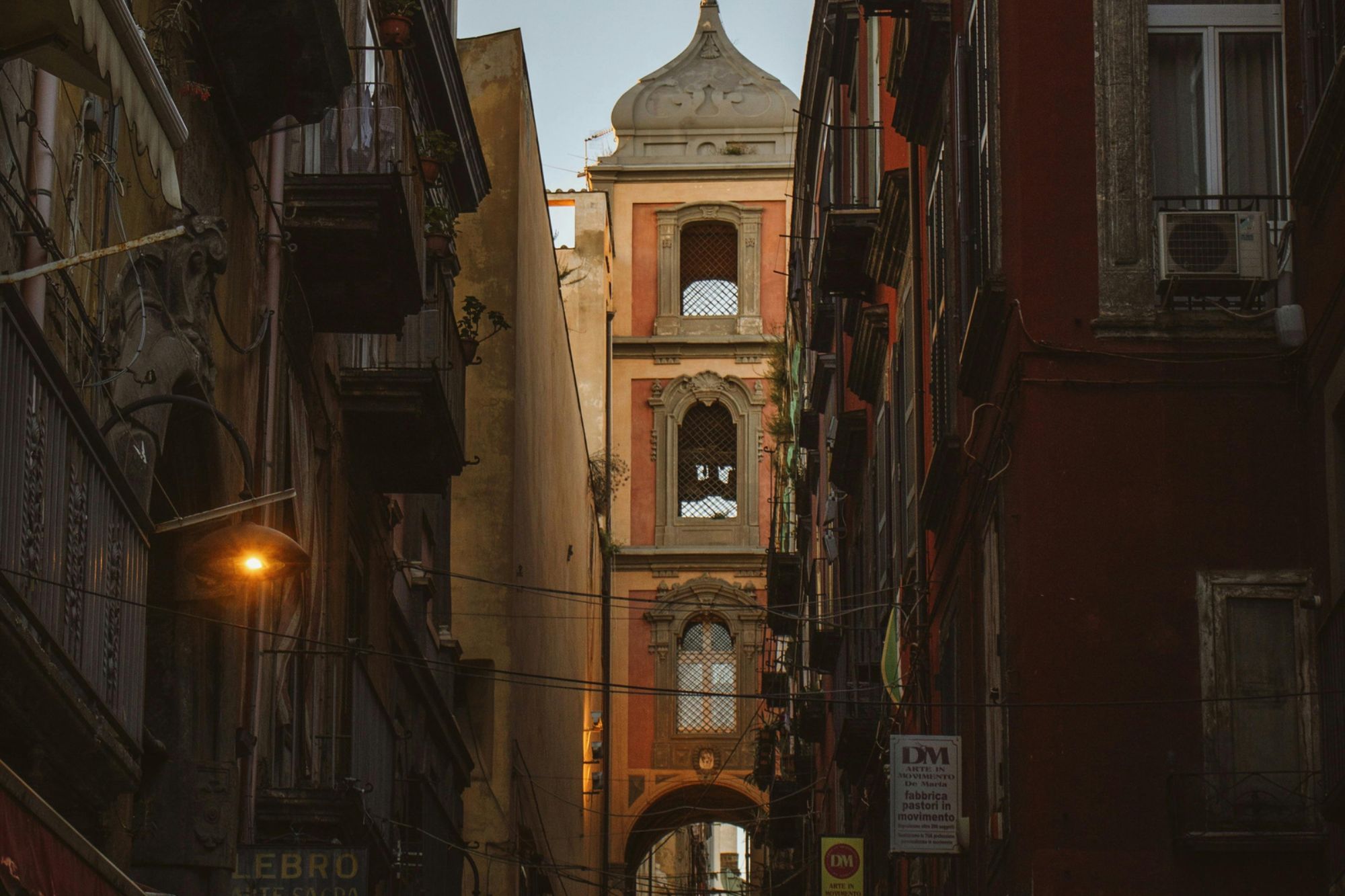
Beyond the workshops: the monumental complex of San Gregorio Armeno
Via San Gregorio Armeno also has strong spiritual significance. Along the street stands the Complesso Monumentale di San Gregorio Armeno, one of the largest, oldest and most important religious sites in the historic center — an oasis of silence just steps from the bustle. It includes the church, the monastery and the cloister, with spaces that bear witness to centuries of Neapolitan history and art.
The church is a sumptuous Baroque building. Its finest features include the carved wooden ceiling painted by Teodoro d’Errico and his workshop, the organ lofts in wood and papier-mâché, a 17th-century marble altar by Dionisio Lazzari, frescoes by Luca Giordano and canvases by Francesco Fracanzano. The church holds the relics of Saint Gregory the Illuminator and the body of Saint Patricia (Santa Patrizia), co-patron saint of the city along with Saint Januarius (San Gennaro).
The monastery, completely renovated in 1580 following the decrees of the Council of Trent, took in young women from the most prominent families of the Kingdom. Today it combines the spiritual life of the nuns with its role as a historic monument open to residents and visitors.
The cloister is a wonderful citrus garden, centered on a Baroque fountain adorned with masks, dolphins and seahorses, flanked by two statues by Matteo Bottigliero depicting Christ and the Samaritan woman meeting at the well.
Before planning your visit, it is a good idea to check opening hours, since this is a religious complex still devoted to its spiritual purpose.
