


The museums of Naples: a complete guide from the MANN to Capodimonte
Naples is one of the cities with the highest cultural and artistic density in the world. Among its streets, its monumental palaces and its unique panoramas lies one of the richest and most fascinating museum systems in Europe. From the great museums of history and archaeology to collections of Renaissance and contemporary art, through to spaces dedicated to science and music, the museums of Naples offer a complete experience — and, for those who weren’t expecting it, a genuinely surprising one.
Whether you have a full week or just a few days — as in the itinerary we suggest in our Naples in 48 hours guide — this guide will help you navigate the city’s main museums, exploring their history, their distinctive character and the reasons not to miss them. Whether you’re an art enthusiast, a history lover or simply a curious traveller, here you’ll find everything you need to plan your visit at its best.
Naples National Archaeological Museum — MANN

The MANN is one of the most important archaeological museums in the world, and the first essential stop for anyone who truly wants to understand Naples. Located in Piazza Museo, it is housed in the sixteenth-century Palazzo degli Studi. The extraordinary origins of its collections are linked to the figure of Charles of Bourbon, but the project to bring them together in the current building was the work of his son Ferdinand IV.
The collections span from prehistoric times to late antiquity and are organized around three main nuclei: the Farnese collection, with artefacts from Rome and its surroundings — including the imposing Farnese Hercules; the Pompeian collections, with finds from the Vesuvian area — mosaics, frescoes, tools and casts that bring everyday life two thousand years ago back to life; and the Egyptian collection, ranked third in the world for importance after those in Cairo and Turin. A visit to the MANN is worth the trip to Naples on its own.
Museum of Contemporary Art Donnaregina — MADRE
The MADRE is one of Italy’s leading contemporary art museums and a key reference point on the international art scene. Located in the San Lorenzo district, just a short walk from the Duomo and the MANN, it is housed in the nineteenth-century Palazzo Donnaregina, restored by the celebrated Portuguese architect Álvaro Siza Vieira in a continuous dialogue between past and present.
The museum holds a site-specific collection featuring artists of the calibre of Daniel Buren, Jannis Kounellis, Jeff Koons, Mimmo Paladino, Rebecca Horn, Sol LeWitt, Richard Long and Luciano Fabro. Alongside temporary exhibitions and cultural projects open to the city, the MADRE includes a library, a media library and a bookshop-café: a living space, not merely an exhibition venue.
Museum of the Treasury of San Gennaro
To the right of the main entrance of the Duomo stands the Museum of the Treasury of San Gennaro, home to one of the most extraordinary devotional collections in the world. Reliquaries, silverware, sacred objects, documents, textiles, jewellery and paintings of inestimable value — everything that kings, popes, nobles and ordinary people have donated over the centuries out of devotion to Naples’ patron saint — is gathered here in a display that never ceases to astonish.
The treasury was transferred to the Vatican during the Second World War for safekeeping and returned to the cathedral in 1947 thanks to the intervention of Giuseppe Navarra. Among the finest pieces: the eighteenth-century mitre set with 3,692 stones including diamonds, emeralds and rubies, and the necklace formed by 13 pendants donated between 1679 and 1929. A museum that tells the story of Naples through its faith, with a depth that few collections in the world can match.
Cappella Sansevero
Nestled in the heart of Naples’ historic centre — just a short walk from Vivaldo Suite Spaccanapoli — the Cappella Sansevero is a jewel of the international artistic heritage. Built around 1590 as a votive offering, this treasure chest of Baroque art acquired its present-day prestige from the eighteenth century onwards, thanks to the eclectic Raimondo di Sangro, Prince of Sansevero, who summoned the finest artists of the era to transform it into one of the most evocative spaces in the city.
Inside, it holds masterpieces of immeasurable value, most notably the Veiled Christ, a marble sculpture by Giuseppe Sanmartino depicting the body of Jesus wrapped in a veil so realistic it appears to be actual fabric. Also on display are the celebrated anatomical machines: the skeletons of a man and a woman standing upright, with their arteriovenous systems almost perfectly intact. A visit to the Cappella Sansevero is one of those experiences that stays with you forever. Booking in advance is strongly recommended.
Certosa and Museum of San Martino
Set in a panoramic position on the Vomero hill, beside the sixteenth-century Castel Sant’Elmo, the Certosa di San Martino is a magnificent example of Baroque architecture offering one of the most spectacular views over the Gulf of Naples. In 1866, following the suppression of religious orders, it was converted into a museum on the initiative of archaeologist Giuseppe Fiorelli, with the aim of documenting the city’s history and artistic culture.
The collection is divided into several thematic sections. Among the most beloved is the Nativity Scene Section, featuring the famous Cuciniello Nativity composed of 800 pieces, and the section dedicated to nineteenth-century Naples, with around 200 works including paintings, decorative arts, sculptures and photographs. The Certosa is also one of the few places where culture, art and panoramic views can be combined in a single visit.
Villa Pignatelli
Located along the Riviera di Chiaia — the elegant heart of Naples, just steps from Vivaldo Suite Piazza dei Martiri — Villa Pignatelli is one of the most significant examples of Neapolitan neoclassical architecture, made all the more charming by the garden that surrounds it, one of the few remaining close to the sea. Built between 1826 and 1830 for the Acton family, it later passed to the Rothschilds and then to the Pignatellis, who transformed it into one of the most elegant and fashionable venues of the Neapolitan Belle Époque.
Inside, three distinct realities coexist: the Diego Aragona Pignatelli Cortés Museum, the only example of a historic house-museum in Naples; the Carriage Museum, with a collection of carriages and harnesses from the late nineteenth and early twentieth centuries; and the Casa della Fotografia, a space dedicated to events and exhibitions exploring photography as a form of cultural expression.
National Railway Museum of Pietrarsa
The National Railway Museum of Pietrarsa is located in Portici, close to the arrival point of the first stretch of railway ever built in Italy (October 1839). The buildings housing the museum correspond to the pavilions of the ancient Royal Mechanical Workshop established in 1840 by Ferdinand II of Bourbon.
The museum covers an area of 36,000 square metres, part of which is occupied by a botanical garden with plant species from around the world. The collection includes more than 55 historic rolling stock, machinery, models, scale replicas and documents connected to the history of Italian railways. An unusual and engaging museum, perfect for the whole family.
Museum and Royal Wood of Capodimonte
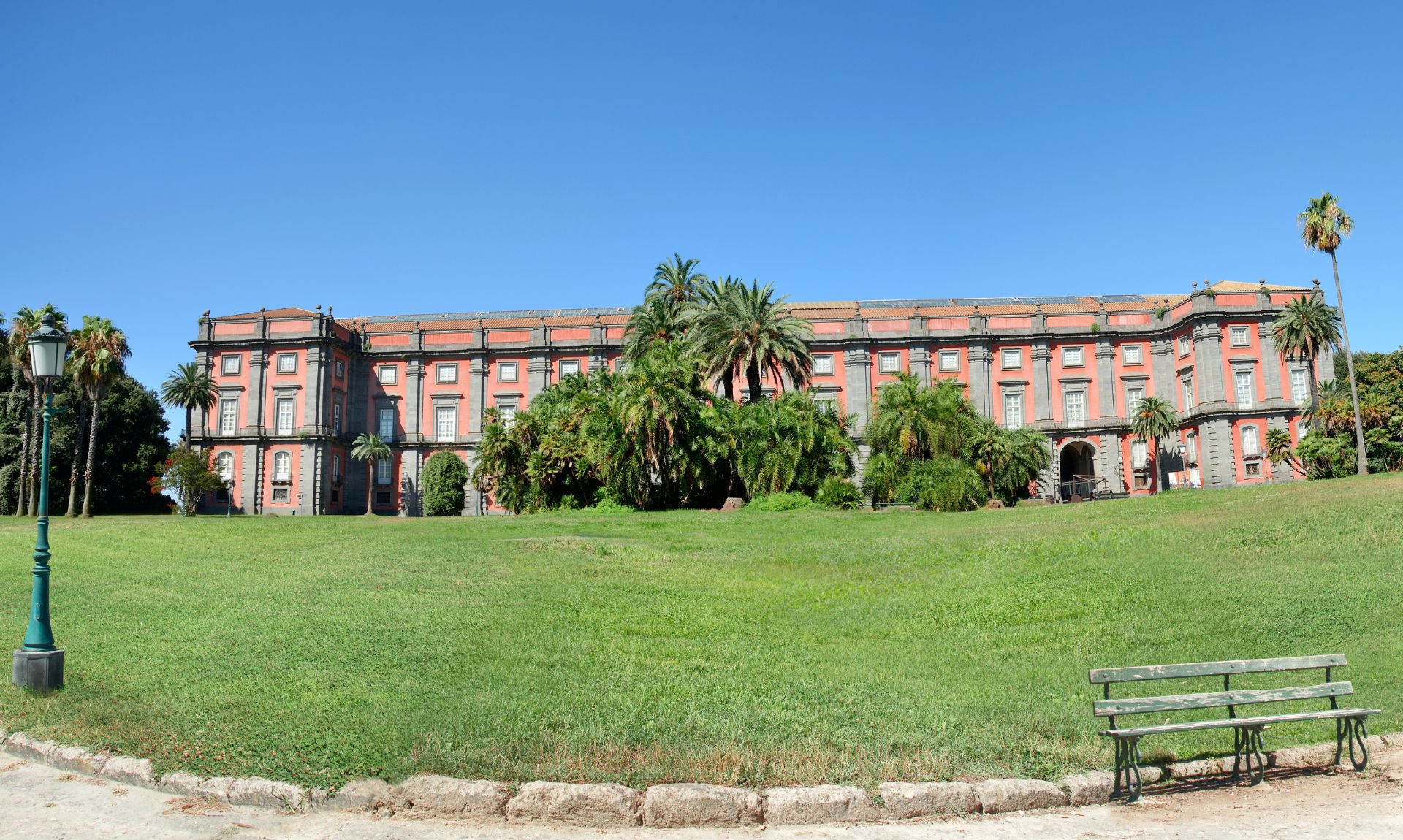
The Museum and Royal Wood of Capodimonte is a vast complex comprising a palace-museum and a historic park of around 134 hectares overlooking the city and its gulf. The majestic royal palace was commissioned by Charles of Bourbon in the eighteenth century and was the first royal residence built by the Bourbon dynasty. Today it houses one of the most important art galleries in Europe.
The collections include works by some of the greatest masters in art history: Titian, Raphael, Michelangelo, Caravaggio, Masaccio and Botticelli, alongside Andrea Mantegna, Correggio, Parmigianino, Francisco Goya, Luca Giordano, Jusepe de Ribera and Artemisia Gentileschi. The collection is further enriched by an exquisite selection of porcelain and decorative arts, a cabinet of prints and drawings, important collections of tapestries and royal furnishings, and the precious Mirabilia Farnese gallery. Capodimonte is Naples’ largest museum and requires at least half a day to explore at a comfortable pace.
Other museums in Naples
Naples’ museum system is so rich that no guide can do it justice in a single reading. Beyond the museums described above, the city is home to numerous lesser-known yet equally fascinating institutions — ideal for enriching a longer stay or exploring specific passions.
Among those worth visiting: the Museo Civico Gaetano Filangieri, the Museo Nazionale della Ceramica Duca di Martina, the Museo Diocesano, the Palazzo delle Arti di Napoli (PAN), the Museo Hermann Nitsch and Città della Scienza, an interactive science hub perfect for families.
Practical tips for visiting Naples’ museums
Book online. For the most visited museums — the Cappella Sansevero above all — buying tickets online in advance is essential, especially at weekends and during the high season (April to October). Queues without a booking can be very long, and a reservation allows you to enter without waiting.
Free museum Sunday. State museums offer free admission on the first Sunday of every month as part of the initiative promoted by the Italian Ministry of Culture. Reductions are also available for under-18s, over-65s, university students and holders of the Campania Artecard, a pass that grants access to multiple sites with a single ticket.
Opening hours and closing days. Most of Naples’ state museums are closed on Tuesdays. Museums generally open at 9:00 am and close between 5:00 and 7:30 pm, with last entry 30 to 60 minutes before closing. Some private and civic museums observe different closures: always check the official website before your visit.
How to plan your route. It makes sense to group visits by geographical area to avoid unnecessary travel. The historic centre concentrates the MANN, the MADRE, the Cappella Sansevero and the Treasury of San Gennaro. The Certosa di San Martino is on the Vomero hill. Villa Pignatelli sits along the Riviera di Chiaia. Capodimonte and Pietrarsa each require a dedicated trip.
Frequently asked questions about Naples’ museums
How many days do you need to visit Naples’ main museums? To cover the main museums — the MANN, Capodimonte, the Cappella Sansevero, the Certosa di San Martino and perhaps the Treasury of San Gennaro or the MADRE — you’ll need at least three dedicated days of visits. Those with less time can focus on two or three highlights, choosing according to their interests: archaeology, classical art, contemporary art or devotional heritage.
Does the Cappella Sansevero require a reservation? Yes, online booking is strongly recommended and during high season is practically essential. The Cappella has limited capacity and queues without a reservation can be very long. Tickets can be purchased directly on the chapel’s official website.
Is there a pass or card for visiting multiple Naples museums? Yes, the Campania Artecard is a tourist card offering free or discounted access to museums and archaeological sites across the region, including many of Naples’ main institutions. Several versions are available depending on duration and included destinations. It is one of the most convenient options for anyone planning a multi-day cultural stay.
Which Naples museums are free? State museums — including the MANN and the Museo di Capodimonte — offer free admission on the first Sunday of every month through the Domenica al Museo initiative run by the Ministry of Culture. Certain categories (under-18s, university students, over-65s and Artecard holders) are entitled to reductions or free entry throughout the year. The Cappella Sansevero is a private museum and does not participate in the initiative.
Which Naples museum is most suitable for families with children? Città della Scienza, an interactive science hub in Bagnoli, is the most engaging museum for children thanks to its hands-on exhibitions. The National Railway Museum of Pietrarsa, with its historic locomotives and botanical garden, is another excellent choice for younger visitors. The MANN, with its Pompeii casts and ancient mosaics, tends to capture the imagination of older children and teenagers.
