


Sorrento’s historic centre: alleys, squares and hidden corners
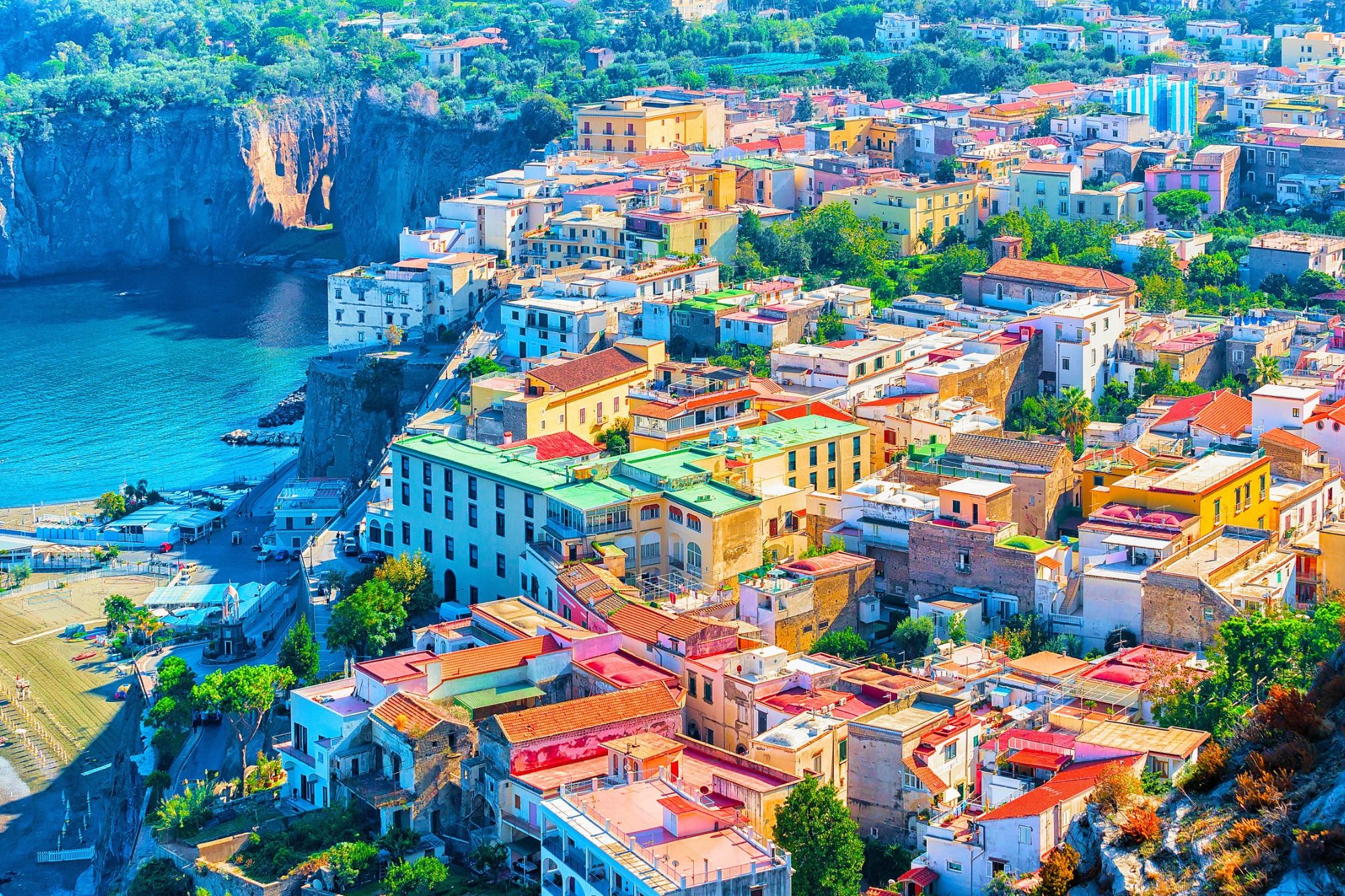
There is a simple way to truly get to know Sorrento: set aside the rush and give yourself the pleasure of walking through its narrow streets, letting the most hidden corners take you by surprise. It is precisely while wandering on foot that Sorrento reveals its most authentic face — a face made of tight alleyways, intimate squares, noble palaces, artisan workshops and views that appear without warning.
Sorrento’s historic centre still preserves the layout of its ancient urban plan, with several of the main streets following the grid established in the Greco-Roman era. Via San Cesareo, Via Santa Maria della Pietà and Via Fuoro remain among the most characteristic axes of this part of the city.
The wonderful thing is that all it takes is setting off from Piazza Tasso and walking at a leisurely pace, mixing the well-known streets with the less-visited ones. What follows is an invitation to discover Sorrento’s historic centre step by step — all the way to its truest soul, which often lies hidden just behind the most famous attractions.
Piazza Tasso, the living room where every walk begins
Piazza Tasso is the pulsing heart of the city — where locals gather, relax and enjoy the lively atmosphere. Named after the celebrated poet and playwright Torquato Tasso, who was born in Sorrento on 11 March 1544, it is the meeting point of the city’s main streets and the natural starting point for a walk with no fixed destination. At the centre stands a statue of Sant’Antonino Abate, patron of the city; in one corner, a statue of Torquato Tasso keeps watch.
From Via Fuorimura, immediately behind Piazza Tasso, the eye is drawn to the Vallone dei Mulini: a deep cleft in the mountainside formed around 35,000 years ago following a violent eruption of the Campi Flegrei. Of particular naturalistic interest, the gorge takes its name from an old mill once used for grinding grain, whose remains are still visible, wrapped in the vegetation that has slowly reclaimed everything, creating scenes of rare beauty.
Via San Cesareo, the ancient Decumanus that never stopped living
From Piazza Tasso, you find yourself on Via San Cesareo almost without realising it — one of the most fascinating streets in the historic centre. Its name honours San Cesario of Terracina, a Christian deacon and martyr who lived between the first and second centuries AD. Along the street — which follows the line of the ancient Decumanus Maximus of the Roman urban plan — seventeenth- and eighteenth-century buildings reflecting the influence of Neapolitan Baroque alternate with open-air café terraces, restaurants and artisan workshops where products rooted in the Sorrentine tradition can be found.
The street is lively and dynamic, one of the busiest in the city, yet still capable of holding traces of its long history. It is worth not limiting yourself to the main thoroughfare: the side alleys invite a slower pace, rewarding those who pause to observe doorways, facades and architectural details that are easy to miss when the eyes are fixed on the destination.
Sedil Dominova, the last remaining sedile in Campania
At the crossroads of Via San Cesareo and Via Padre Reginaldo Giuliani stands the Sedil Dominova — one of the most historically significant buildings in the historic centre. It faces onto a small widening of the street known locally as “schizzariello” and is the only surviving example of a sedile in the entire region. The sedile was a type of gathering space widespread in southern Italy: architecturally evoking a Roman arch with a central hall where the nobility assembled to administer their towns. They were abolished in 1800 by Ferdinand IV of Bourbon and largely demolished.
Built in the fourteenth century, the Sedil Dominova has remained substantially unchanged in its original structure. It preserves an elegant loggia open on two sides, with broad round-arched arcades in piperno stone supported by multi-shaft pilasters, crowned by a later dome clad in majolica tiles — the so-called “riggiole”. The interior walls are enriched by eighteenth-century frescoes.
Via Santa Maria della Pietà, between noble palaces and the Cathedral
Continuing along Via Padre Reginaldo Giuliani and crossing Corso Italia brings you to Via Santa Maria della Pietà: another street that speaks of the city’s ancient layout. It follows the line of the upper Roman Decumanus and is permanently in half-shadow — quiet, perfect for a walk well away from the tourist flow. Here stand noble palaces such as Palazzo Veniero — dating from the thirteenth century and marked by Byzantine elements — and Palazzo Correale — built in the fourteenth century with clear influences from Catalan Gothic architecture.
Along the street stands the Cathedral of Santi Filippo e Giacomo: built between the ninth and tenth centuries, it was reconstructed in the sixteenth century after the Turkish invasion and took on its current Baroque appearance following work carried out in the early eighteenth century. Inside, alongside fine Sorrentine marquetry inlays, the archiepiscopal throne of 1573 and the painted ceiling canvases stand out.
Piazza Sant’Antonino, the spiritual and religious heart of the city
From Via Santa Maria della Pietà, taking Corso Italia and then Via Luigi De Maio leads to Piazza Sant’Antonino — where the most devotional side of the city can be felt. Laid out in the nineteenth century, it was originally called Largo del Castello: where the statue of Sant’Antonino stands today, there once stood a fifteenth-century castle, demolished in 1843.
The square is dominated by the Basilica of Sant’Antonino — a symbol of deep faith and popular devotion. The people of Sorrento are very attached to this church because it is dedicated to their patron saint, whose remains it holds. Built in the eleventh century, from the outside it looks nothing like a church; the interior, however, in Baroque style, is decidedly more ecclesiastical in feel, with Roman artefacts, solemn paintings and a gilded ceiling.
The Cloister of San Francesco, a corner outside time
Near Piazza Sant’Antonino stands the Cloister of San Francesco — one of the most evocative corners of the historic centre, and one of the places most sought out by those who want to experience Sorrento in its most romantic dimension. The complex has ancient origins and its architecture is the result of transformations accumulated over the centuries. It is an oasis of tranquillity, adorned with bougainvillea and filled with birdsong.
Two of its sides are characterised by octagonal pillars with elegant capitals supporting round arches. The other two feature pointed arches, slender columns and lunettes, giving the cloister a distinctly special appeal. It is no surprise that it is one of the most beloved settings for weddings in Sorrento.
All around the complex extends the Villa Comunale, which opens onto a wonderful view over the Gulf of Naples and Vesuvius. It is another example of how, in the centre of Sorrento, just a few steps are enough to move from the historical dimension of the streets to the open sweep of the landscape.
Via Fuoro, discovering the most authentic Sorrento
From the Cloister of San Francesco, following Via Vittorio Veneto and then Via Torquato Tasso leads to Via Fuoro. The name is thought to derive from the Latin “forum”, recalling its historical function as an area of exchange and commerce. Compared to the more visited streets of the centre, it has a quieter, more gathered feel and offers a different perspective on Sorrento. The street and the alleyways around it tell the story of a historic centre that is still lived in — made up of everyday details that belong to daily life. Here there is no need to look for a specific attraction: the street itself becomes part of the experience.
Walking without hurry, pausing in front of a doorway or turning down a small side street makes it possible to catch that sense of continuity between past and present that defines the historic centre. And it is in precisely these moments that a stroll becomes a way of knowing Sorrento beyond its most famous sights.
Via Sopra le Mura and the traces of a fortified Sorrento
Via Sopra le Mura is one of the oldest streets in Sorrento. The name leaves no room for doubt: it follows the original path of the walkway that ran along the top of the city’s defensive walls, along its westernmost edge overlooking Marina Grande. This stretch of walls was known as “della Manganella” and its remains are still clearly visible in several places.
The city’s fortifications accompanied Sorrento’s history for centuries, being modified and rebuilt repeatedly to meet new needs. Walking here allows the imagination to travel back to the origins of the walled city. The surviving traces make it possible to read the historic centre through its defensive function as well — and to better understand the structure that still shapes its streets today.
Frequently asked questions about Sorrento’s historic centre
How long does it take to explore Sorrento’s historic centre?
A walk covering the main highlights — Piazza Tasso, Via San Cesareo, the Sedil Dominova, Via Santa Maria della Pietà, Piazza Sant’Antonino and the Cloister of San Francesco — takes around 2 to 3 hours. Those who also want to explore Via Fuoro, Via Sopra le Mura and the side alleys should plan for half a day, ideally early in the morning when the atmosphere is most peaceful and foot traffic is light.
What is the best time to walk through Sorrento’s historic centre?
The early morning hours are ideal: the light is soft, the streets are nearly empty and the authentic character of the place comes through most clearly. The late afternoon is also pleasant, as the heat eases and the centre comes back to life with residents going about their day. The summer midday — with the sun high and the squares crowded — is the least suitable time for a slow and curious walk.
Is Sorrento’s historic centre suitable for families with children?
Yes. The historic centre is largely pedestrianised and relatively flat, with few demanding slopes. The squares offer open space to move around freely, and the artisan workshops — with their colourful window displays — tend to catch the curiosity of younger visitors as well. For those with a pushchair, Via San Cesareo and Corso Italia are the most accessible routes.
Is the Sedil Dominova worth seeing?
Absolutely. The Sedil Dominova is one of the most distinctive buildings in the historic centre — the only surviving example in all of Campania of this architectural type. It is often walked past without a second glance, but those who stop to look carefully — the loggia, the frescoes, the majolica dome — discover one of the least-known treasures in Sorrento.
What can you buy in the artisan workshops of Via San Cesareo?
Via San Cesareo and its surroundings form the heart of Sorrentine craftsmanship: wood marquetry inlays, hand-painted ceramics, wrought-iron objects, lemon-based products — from limoncello to lemon cakes, creams and soaps — and coral accessories. For a deeper look at the history and techniques of local craftsmanship, the article on Sorrento’s artisan traditions offers a complete guide to the historic workshops not to be missed.
